Powder coating near Ogden, Utah.
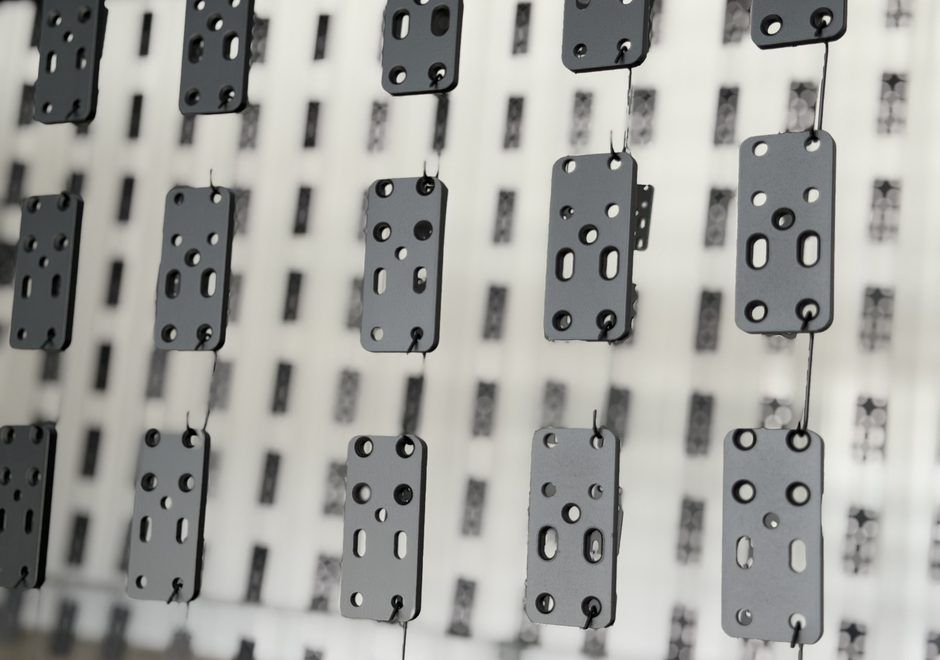
Proper Powder Coating Co. is an industrial and custom powder coating shop in Uintah, Utah (just outside Ogden), serving trailer builders, fab shops, ornamental iron, off-road accessory makers, machine shops, and OEM production runs from Salt Lake City to southern Idaho. Every part is blasted, pretreated, coated, and oven-cured, with a standard turnaround of 2–3 business days. Parts up to 20 × 10 × 10 ft fit the oven, and there is no minimum order.
Quick facts
- Location
- Uintah, UT (Ogden area)
- Turnaround
- 2–3 business days; rush when the schedule allows
- Max part size
- 20 × 10 × 10 ft
- Finishes
- Gloss, satin, matte, texture, metallic, candy, clear
- Minimums
- None
How a part goes through
Four steps, in this order, every time. The first two are where most coating failures start, so they are the two we refuse to rush. A finish is only as good as the steel under it, and nobody has ever returned a bracket because the prep was too thorough.
We run each job against a written spec: substrate, prep level, powder product code, target film thickness, cure schedule, and masking. The spec travels with the parts on a job ticket. That is how a part coated on a Tuesday matches one coated three months later on a Thursday.
- Blast. Rust, mill scale, old paint, and mill finish come off. An anchor profile goes on so the coating has something to grip. Details on the sandblasting page.
- Pretreat. Wash and phosphate conversion coat, matched to the metal: iron phosphate for steel, a non-chrome conversion for aluminum. Castings get pre-baked to outgas before they see powder.
- Coat. Electrostatic application by a person with a gun and a mil gauge. Film thickness is checked, not assumed. Masking goes where you asked for it and nowhere else.
- Cure. Full cure at metal temperature, not air temperature. Heavy sections take longer to come up to heat, so thick-wall trailer tongue and thin sheet brackets are not cured on the same clock. Cured to spec, not to a timer.
Finishes
Gloss is measured in gloss units on a 60° meter, which is how a spec sheet should describe it. "Satin" from one powder maker is not satin from another, so if you are matching an existing part, send the part or the powder product code and we will match the number, not the adjective.
- Gloss (roughly 70–90+ GU). Deep color, easy to clean, shows every weld ripple underneath. Good for equipment and anything that gets hosed off.
- Satin (roughly 30–60 GU). The default for railings, furniture, and architectural steel. Hides minor surface variation, still looks finished up close.
- Matte / flat (under about 25 GU). Modern architectural look, fingerprints less than you would think.
- Texture. Fine or coarse wrinkle and sand textures. The standard for off-road, trailer, and enclosure work because it hides substrate imperfections and shrugs off scuffs. Texture black that stays black.
- Metallic. Mica and metal-flake powders. Often needs a clear top coat for exterior UV and handling. We will tell you when it does.
- Candy / translucent. Two-stage over a chrome or silver base. Bright, deep, and more labor than people expect.
- Clear. Over bare polished metal, raw steel "industrial" looks, or as a protective top coat over metallics and candies.
Colors
We coat from the full RAL range and stock the colors our repeat customers actually run. Anything else can be ordered by product code from the major powder manufacturers, usually within a few business days. If you do not have a code, bring a sample and we will match it. See custom colors and color matching.
For repeat SKUs, your color is not a color name. It is a manufacturer, a product code, a gloss range, a film thickness, and ideally a powder lot. We keep all of it on file against your part number. When you reorder, you give us the part number. We keep your color and finish on file so run twelve looks like run one.
Single-stage and two-stage
Most industrial work is single-stage: one coat of powder, one cure, typically 2–4 mils of film. It is durable, fast, and what most spec sheets call for.
Two-stage means a second coat and a second cure. That second coat is usually one of three things: a zinc-rich or outgassing-forgiving primer under the color coat for corrosion protection (common for trailers and anything that sees road salt on I-15 in January), a clear top coat over a metallic or candy, or a base coat under a translucent color. Two-stage costs more because it is two trips through the oven. We recommend it when the part needs it and not otherwise.
What we coat
Steel, stainless, aluminum, cast iron, cast aluminum, and hot-dip galvanized. Each one is prepped differently, which is the part the coating depends on and nobody photographs.
Galvanized steel is the one that needs a conversation. Zinc outgasses in the oven and can blister the finish, so galvanized parts get a light sweep blast and a pre-bake, and sometimes an outgassing-forgiving primer. Castings get the same pre-bake. Chrome and most plated finishes have to be stripped first; powder does not bond to them. If you are not sure what a part is made of, say so on the quote form and we will figure it out before we start.
Masking
Threads, bores, bearing seats, ground points, mating faces, and anything that has to stay conductive or dimensionally exact gets masked with high-temperature plugs, caps, and tape. Tell us on the drawing or on the quote. Circle it on a photo if that is easier.
For production parts, the masking map lives in your spec file, so the second run is masked exactly like the first without anyone re-reading a drawing. Machine shops tend to care about this the most, and they are right to.
Turnaround and rush
Standard turnaround is 2–3 business days from drop-off to pick-up. That is the promise, not the best case. If a job cannot make it (a custom powder on order, a very large batch, a two-stage finish on a long run), you will hear it at the quote, not on day four.
Rush is available when the oven schedule allows. We will tell you honestly whether it does. Repeat accounts on scheduled runs get a standing slot, which is usually faster than rush and costs less.
We do not cure to a timer. We cure to a temperature. The timer is aware of this.
Who this is for
Repeat SKUs where the finish has to match the last run. If your customer will notice a shade off, so will we.
Powder coating: questions
Straight answers. The full list covers cost, durability, substrates, minimums, and pickup.
All questions →How long does powder coating last outdoors in Utah?
Properly prepped and cured powder coating typically lasts 15 to 20 years outdoors in Utah before it needs attention, and often longer on architectural steel. The things that shorten that are poor prep, thin film, and road salt reaching bare metal through a chip. Blasting, phosphate pretreatment, and a zinc-rich primer on parts that see winter roads are what get you to the long end.
What is the difference between powder coating and paint?
Powder coating is a dry powder applied electrostatically and melted into a continuous film in an oven, while paint is a liquid that dries as its solvents evaporate. Powder goes on thicker, typically 2 to 4 mils, and is harder and more chip-resistant. It also has almost no solvents. Paint is easier to touch up in the field and works on parts that cannot go in an oven. That is the trade.
Can you powder coat over an existing coating?
We almost never coat over an existing finish, because the new coat is only as good as the old one underneath. Old paint or powder gets blasted or chemically stripped to bare metal first. The exception is a same-day recoat of our own fresh powder, which we can do in-house under controlled conditions. Coating over mystery paint is how finishes peel in sheets a year later.
What temperature does powder coating cure at?
Most powders cure at about 375 to 400 degrees Fahrenheit, measured at the metal, for 10 to 20 minutes once the part reaches temperature. Heavy steel takes longer to heat up than thin sheet, so cure time depends on the part, not just the oven setting. Low-cure powders exist for heat-sensitive assemblies. Anything with rubber, plastic, or electronics attached has to come off first.
Do you powder coat one-off parts for individuals?
Yes. There is no minimum order, and one bracket is a job. Most of our volume is repeat work for manufacturers and fab shops, but we coat individual parts, gates, frames, and project pieces too. One-offs are scheduled into existing runs of the same or similar color when possible, which keeps the price reasonable and the turnaround at two to three business days.
Send us the part.
Dimensions, quantity, color, when you need it. We'll quote it today.Dimensions, quantity, color, when you need it. A photo helps. We'll quote it today.